Why is the Fed Raising Interest Rates?
What Does the Federal Reserve Do?
Are There Going to Be More Interest Rate Hikes?

Like it or not, it is safe to say we live in very interesting times. With the rampant inflation our economy has seen lately, the Fed had no choice but to hike interest rates again. As of October 24th, the average 30-year fixed rate is approaching 7%, which is more than double what they were just eight months ago. This means that a $150,000 house bought with a 30-yr loan six months ago has monthly payments half the amount as the same house being bought today. Now you might ask yourself, how did we get here?
Why is the Fed Raising Interest Rates?
The short answer: inflation. Inflation is ever-present not only in our economy but around the world. Most economists attribute this to the events going on halfway across the world in Ukraine. Putin’s war against Ukraine has greatly affected the global supply of oil, which the vast majority of the world is still dependent on. This has resulted in the price of gasoline skyrocketing, which in turn has increased the price of others goods. For example, the costs of groceries and automobiles have increased as the price to ship them has exploded. The idea behind rising interest rates is to curb the rapid circulation of money in our economy. When the Fed hikes interest rates, their objective is to create a larger barrier of entry to dissuade those who are reliant on credit from buying more goods.
While the Fed is discouraging investors from using credit to buy properties, there are other ways to get equity in a property. Learn the three ways to buy your first rental property.
What Does the Federal Reserve Do?
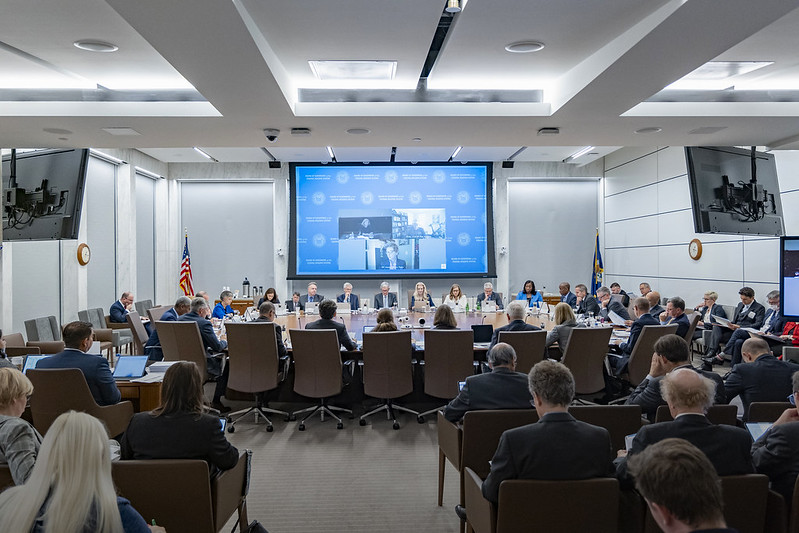
In July, the Fed first raised interest rates by 0.75% in an effort to slow down the circulation of currency in our economy. This surprised investors and consumers alike, as the Fed hadn’t been that aggressive in hiking rates in thirty years. This is largely because of the once-in-a-lifetime inflation nowadays.
However, this is why we have the Federal Reserve.
Their duty is to “set U.S. monetary policy to promote maximum employment and stable prices in the U.S. economy.” Therefore, we look to the Fed to ensure the economy is healthy and working for all.
Are rising interest rates going to cause the housing market to crash? Read more here.
Are There Going to Be More Interest Rate Hikes?
It depends. The Fed has had good reason to increase interest rates as of late. Currently, the United States economy is witnessing inflation at 8.2%, which is a 0.4% increase from last month, and a 2% hike from this time last year. This means that the purchasing power of the U. S. Dollar has been significantly decreasing in just the past year alone. For the Fed to feel comfortable enough to decrease interest rates, they first have to see inflation begin to dissipate. On the other hand, if inflation continues to rise and the war in Ukraine doesn’t end soon, we can expect more hikes in the interest rates before the end of the year.
Recently, Congress passed the Inflation Reduction Act. This legislation enacts a 10-year plan to fight inflation in the United States. The law presents provisions to “change the eligibility rules to claim a tax credit for clean vehicles,” among other things. This is a calculated effort by Congress and the Biden administration to lessen our dependence on fossil fuels, which plays a large part in the recent inflation we’ve seen. This means politicians in Washington are actively doing their part to address high prices, but time will tell how effective their plan will be.
Is Now the Time to Buy a Property?
Until we begin to see these rates decrease I would suggest holding off on buying a new property unless it’s a home run deal. Due to the volatile housing market, it may be safer for an investor to buy a property in cash or wait for the market to cool down.
Bottom Line
The Fed is meeting next week and in December to discuss interest rates. Hopefully, inflation will have subsided and they’ll have good reason to decrease interest rates.
Leave a Reply